

From the outside, with its high minarets and bulbous Mughal-style dome, the Wilmersdorf mosque, located on Brienner Street in southwest Berlin, looks much the same as it did when it was built in the 1920s. But the institution, just like the city around it, has changed.
Today, the mosque is a quiet place. It mainly serves as an information center: School children sometimes visit on field trips; it hosts interfaith brunches. A small community of Muslims regularly show up for Friday prayer. It’s all a far cry from the days when the Wilmersdorf mosque was the lively center of a spiritual countercultural movement in the Weimar Republic.
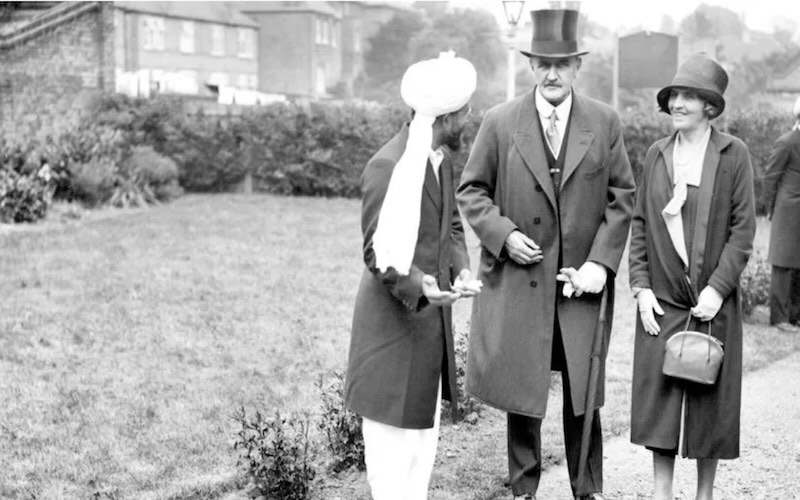
The Ahmadiyya missionaries from British India’s Punjab region who built the mosque attracted a varied crowd in 1920s Berlin, hosting lectures that tapped into the philosophical questions of the day. Topics included the growing gap between life and doctrine; the future of Europe; and the future of humanity as a whole. Germans of all ages, wrestling with their profound disillusionment in Christian civilization in the wake of World War I and seeking a religious alternative that was modern and rational, as well as spiritual, attended these lectures, and many of them ultimately converted to Islam.
It’s an odd scene to imagine in today’s Germany, where the right-wing Alternative for Germany party has called for a ban on burqas and minarets, and more than half of Germans say they view Islam as a threat. But in the interwar period, Berlin boasted a thriving Muslim intelligentsia comprising not only immigrants and students from South Asia and the Middle East but German converts from all walks of life. Islam, at the time, represented a countercultural, even exotic, form of spirituality for forward-thinking leftists: Think Buddhism, in 1970s California.
Germans were no exception in displaying this kind of openness and even fascination with Islam…
Full article at Foreign Policy and Archive.org