


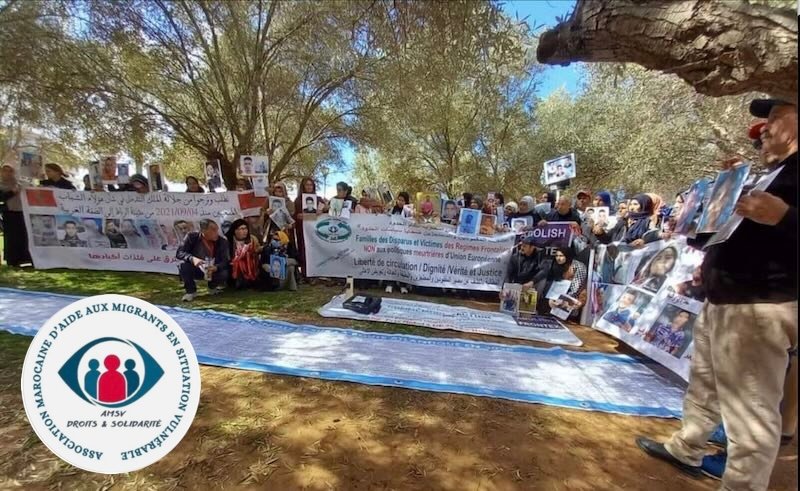
The office of the Moroccan Association for Aid to Migrants in Vulnerable Situations is arranged over two floors in a modest building in Oujda. The walls of one room are covered in pictures, including photographs of young men who have gone missing. There are also campaign posters calling for the abolition of the European Union’s border agency, Frontex, and a picture of Shireen Abu Akleh, the veteran Palestinian journalist who was killed by an Israeli sniper while reporting on a military raid in Jenin in 2022.
The AMSV was established in 2017. As well as supporting those who make the perilous journey from Africa to Europe and their families, it monitors the cases of people who have disappeared, been detained or died. It helps to look for the missing and to identify the dead. It also carries out research and provides data that can be used both in individual cases and in campaigns for institutional change.
The association’s staff have to contend with under-resourcing, lack of co-operation and outright hostility from governments, whether they are trying to identify the recovered bodies of those who have died at sea or to find out where people are being detained. The Moroccan authorities used not to recognise cases of disappearance, arguing that the missing people had left the country of their own free will. That has now changed, thanks to lobbying by the AMSV, a small but critical success in an uphill struggle.
Hassan Ammari, the AMSV’s director, told me that the organisation is rooted in the principle of freedom of movement. It doesn’t encourage people to make the journey to Europe, but recognises their autonomy and knows that it cannot stop them. Instead, it campaigns for migrants’ rights to be respected and challenges the violence of Europe’s border regime.
The families of those who have gone missing or been imprisoned play a crucial role in the AMSV. In October, families demonstrated at the border, commemorating Algeria’s war of independence while drawing attention to their relatives imprisoned after crossing into the country. They have produced practical guides to help others searching for missing…
Read the full article at London Review of Books