

Watch the video at the Al-Andalus Tribune Substack
Islamic Studies scholar Salim Mansur is a deeply knowledgeable, sincere, spiritually-engaged seeker of truth with the courage to face both the shortcomings, mistakes, and failures of today’s Muslim community, and the even more egregious failures of contemporary Western civilization—including the ones professors are not supposed to talk about, like the 9/11 false flag operation and the genocidal Zionist stranglehold over Western politics and media, and its relationship to Jewish religious and cultural identity.
Salim Mansur writes:
…A few weeks ago, I received an invitation from an American organization based out of New York with the name PageandPodium.com, a Book Club with a Publishing arm.
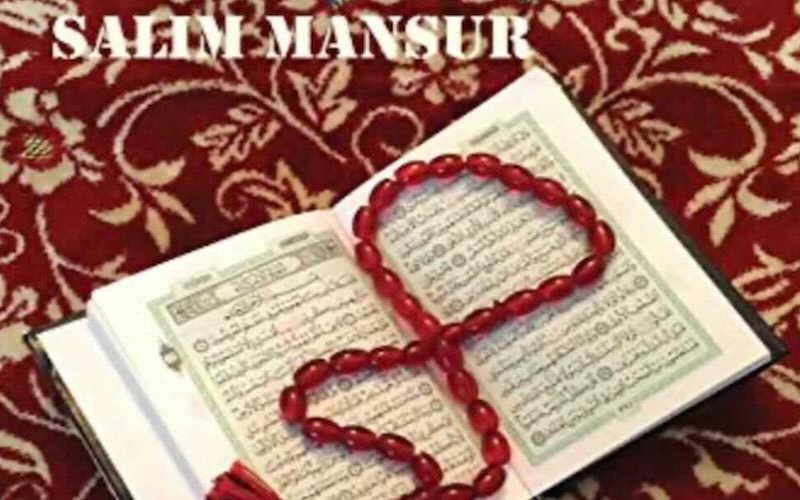
The invitation was signed by the Chief Editor of Page and Podium inviting me to do a “Author Spotlight” interview as part of their regular programming in featuring books selected and their authors. My book The Qur’an Problem had turned up on his desk, sort of fascinated him, and he and his editorial group wanted to feature the book that required an interview with me and then as an option engage with the membership of the organization in conversation described as Community Reading Challenge. I agreed thinking that possibly the circumstances of the present moment in history is generating among Americans a greater curiosity about Islam and Muslims, and my participation through invitation in such a program could have more upside than downside. I want to share with you the result, i.e the Author Spotlight interview (for what it is worth), and the Community Reading Challenge to which I contributed with my comments…
My two comments taken together might be read as potentially one long essay in comparative analysis of Christianity and Islam, Christians and Muslims, without going into the granular since I had no sense of the sort of members participating in the Community Reading Challenge. I did not want to become too technical or academic assuming that many of the members would lack a background in comparative knowledge of Christianity and Islam to begin with.
Watch Professor Mansur’s talk in the above video, and read his extensive comments to Page and Podium’s Good Reads chatboard compiled into the essay below.
Salim Mansur is a professor emeritus of political science at the University of Western Ontario in Canada. He is a former columnist for the London Free Press and the Toronto Sun , and has contributed to various publications including National Review , the Middle East Forum and Frontpagemag .
Salim Mansur Comments on Responses to His Lecture
“…the task of reading, interpreting, understanding the Quran could not by decree of those holding power be prohibited, and this is the ‘Quran Problem’ in a nutshell I discuss in my book.”
Part 1
Let me begin by noting Islam is one of the world’s major religions and has been a subject of study, controversy, polemics among non-Muslims, especially Christians and people within Christendom going as far back to the Crusades beginning in the 11th century of our Common Era. This is one part of the equation, while the other (in the context of my book) is the living faith of nearly 2 billion people within the world of Islam (the Global South, consisting of Africa and Asia) and beyond into the contemporary global community that is the Global North including Australia and New Zealand, and South America.
So, first the ferment and turmoil among Muslims at present are a continuum of the ferment going back to the earliest decades of Muslim history after the demise of the Prophet in 632 CE or in the Islamic calendar 10 AH (i.e. “after Hijra” meaning after the flight of the Prophet from Mecca to Medina in the year 622 CE when he sensed the Meccans of his birth city had prepared to assassinate him). The Islamic calendar begins with the flight of the Prophet as year one and in the Islamic calendar the present year 2026 CE is the year 1448 AH. You might want to google and find out for yourself how the Islamic lunar dating calendar varies from the Gregorian solar dating calendar that became the standard global calendar since 1582 by the decree of Pope Gregory XIII.
The difference in the present ferment among Muslims from past ferments is the history that Muslims confront presently, and thus the difference is in situations and circumstances encountered in their history. It is similar to the difference encountered by the people and cultures in the West in different historical eras – in the Western calendar the different periods would be the Dark Age from the fall of the Roman Empire to the Crusades; then the Late Antiquity from the Crusades to the Renaissance also referred to as the early Middle Age; followed by Reformation, Counter-Reformation, wars of religion and Inquisition within Christendom along with the Age of Discovery dated with Columbus’s sea voyage of “discovery” that demarcate the Middle Age from the Modern Age; and the Modern Age beginning with the era of Enlightenment in the 18th century and joined by the Scientific revolution heralded by Copernicus, Galileo, Newton, and then the making of the Industrial age. Some now suggest that the Modern Age has been succeeded by the Post-Modern Age or post-modernism in which one finds the whole world in ferment, as in “culture wars”, brought about by the transition from older technologies to newer ones.
I clearly demarcated Muslim history between the Prophetic era as sacred history during which time Muhammad received the revelation (the Qur’an) and was guided accordingly to deliver the message given to him; and what follows thereafter has been the post-Prophetic era of Muslim history as profane history. During the sacred period of approximately 23 years which ended with the Prophet’s demise, the Prophet was the authority for Arabs who accepted the message of the Qur’an and became Muslims (“Muslim” means one who has submitted) submitting to its commands and directives as revealed to Muhammad, the “rasul” of God (in Arabic “rasul” meaning messenger). “Islam” and its derivative “aslamna” means submission, the ultimate submission that matters is willingly with conviction and without coercion submitting to God, the Creator of the Universe and all living matter within it, and the Lord of mankind and the only true God worthy of worship by man.
After the demise of the Prophet the quest for authority among the first generation of Muslims (primarily Arabs among whom Muhammad lived, struggled, and died) led to controversies, schisms, conflicts, which derived from the challenge of how to read, interpret, and apply the Qur’anic message in the making of an Islamic polity and culture. When the Prophet was alive, he was the authority, and consequently following his demise was the beginning of the profane history of Muslims wherein the whole spectrum of struggles over authority and its institutionalization as tradition occurred and continues due to human nature that is imperfect, fallible, and riddled with flaws. Perfection, as Muslims believe, only belongs to God.
Here let me point out Max Weber’s very useful sociology of the evolution of political order. Weber describes three stages in its evolution: one, the role of charismatic leader (a warrior king, such as Emperor Constantine; a triumphant military general such as Washington, Napoleon, Mao Zedong; or a prophet, such as Zoroaster, Moses, Muhammad); second, following the charismatic leader the process of institutionalization and routinization of that charismatic order into a tradition; and third, the making of a legal-rational system, such as a constitutional republic that defines the nature and place of authority within the system and the separation of that authority into executive, legislative, and judicial branches.
Every traditional system at the point of its origin was something new, something innovative, under a charismatic leader and after him institutionalized. The granular detail of how this occurs is the study of profane history (in the case of Islam, or Christianity, or post-revolutionary secular regimes as in the USA, France, the former Soviet Union, China, India, etc.); of the process involved, and the controversies and conflicts dealt with as in the American Civil War, and so on and so forth.
In other word authority itself, and the tradition that emerges as a result, is a process over time and, I might add, never entirely settled since history itself is a process pushed by new ideas and new technologies. Hence, every traditional system once established has to be adaptive or, if not, suffer potential breakdown resulting from the ferment caused by changes it confronts.
As I have pointed out, the Qur’an is not a political manifesto, nor a textbook of science and technology, nor a blueprint of a constitutional order. It is revelation meaning God, as the Creator of the Universe and Lord of Mankind or Father in Heaven (as in Christian theology) providing guidance for a moral life of righteousness in the here and now that will lead to blessed hereafter.
The revelation, or message, is accompanied with lessons of warning from history known to the recipients that those people who willfully denied the guidance, and in choosing to do differently brought ruin upon themselves. The man to whom the revelation is given, the Prophet as the messenger, strives to apply the message containing “commands / directives” and “allegories” as illustrations, in building a community (“ummah” in Arabic) of faithful in accordance with the message received.
The people after the Prophet had departed from their midst took upon themselves the responsibility to routinize the message around which the “ummah” would proceed to build their polity and culture. This entire process extended over time, and when it is studied shows how paradoxical is the process. Those who first engaged in the making of the post-Prophetic order were innovating as best they could to set the rules of reading, interpreting, applying the Qur’anic message and prescribing the role of designated or elected authority in constructing an Islamic polity. And then what has been set in motion became traditional over time, and the traditional order then was met with the challenges of new ideas, new techniques, etc., and unless this traditional order possessed the inner capacity to adapt, to change, to be flexible, in the face of crises and conflicts, its breakdown occurred, or it fragmented into competing political orders.
The profane history of Muslims, not Islam, is like any other polity and culture. The closest analogy I draw of Muslim politics and culture / civilization is with that of Christendom, and this analogy does not mean sameness but similarity of what and how Christian civilization / the West evolved over time, and similarly that of Muslims and Islamdom (a term that Marshall Hodgson, one of the finest American historians of Muslims and Islam, coined as an analogy to Christendom).
Muslims are met presently with challenges of the twenty-first century and the ferment they are faced, or as I labelled it the “war within Islam”, is how they adapt their traditional understanding of the Qur’an and the Sunnah / Hadith (traditions of the Prophet) to the requirements of the present age. They live in the Democratic Age in which the “voice of the people” and their interests are the motive force of history. In the beginning their tradition was innovative, new, indeed revolutionary in the context of time, and they met their challenges regardless of the difficulties and conflicts among themselves to make and spread the revelation brought to them by Muhammad into an impressive Islamic civilization when the two most prominent civilizations proximate to the first generation of Muslim Arabs in the 7th century CE, the Eastern Roman or Byzantium Empire and the Persian Empire, imploded and collapsed.
In the earliest period of the making of Islamic civilization and the process of routinization of the Prophetic order into the post-Prophetic order, of the transition in Muslim history from the sacred era to the profane period, the learned men of the time set the rules / methodology for reading and interpreting the Qur’an and for legislation and jurisprudence based on the sacred texts. By the end of the 10th century the learned scholars of Islam (the “ulema” in Arabic) had codified the structure or science of Islamic jurisprudence (“fiqh” in Arabic). These were: (i) “ijtihad”, meaning the independent effort or reasoning required in original thinking; (ii) “qiyas”, meaning analogical reasoning; (iii) “ijma”, meaning consensus among the “ulema”. They then reached a consensus that the work had been done, the routinization in Weberian term had taken place, and with this they (the Sunni “ulema” being the majority among Muslims) declared by the end of the 11th century CE (end of 4th century AH in the Islamic calendar) the closure of “ijtihad”. They set the requirement that instead of “ijtihad” the jurists, henceforth, would practice imitation (“taqlid” in Arabic) or restricted to following precedents set by the earlier generations. This became the orthodoxy. It meant that any new or unorthodox reasoning / innovation would be considered heresy with the inevitable penalty that follows.
The minority Shi’a “ulema” did not accept the Sunni consensus in jurisprudence / “fiqh” of the closure of independent reasoning or “ijtihad”, and the Shi’a “ulema” devoted to jurisprudence came to be known as “mujtahid” (those trained in independent reasoning of the sacred texts of Islam). This is a vital difference between the two major streams or sects among Muslims, Sunni and Shi’a, which has been at play in the controversies and conflicts between Sunni majority countries (Saudi Arabia, the Gulf States, Pakistan, Egypt, etc.) and Shi’a communities, as in majority Shi’a Iran and Shi’a minorities as in Lebanon.
The pressures to adapt to the demands of the contemporary age is felt across the Muslim world and cannot be avoided. The “voice” of Muslims within their community cannot be erased, only repressed, in the democratic age. Muslim women, for instance, have become increasingly important as agents of change and adaptation. Pakistan and Bangladesh, two of the largest Muslim countries in term of population have elected women as prime ministers in recent years, and Muslim women are engaged in leadership roles in government and civil society across the Muslim world.
Democracy requires and demands elected representatives as authority figures. Traditional orders require adaptation to new demands. This is a dialectical process. There will be friction in society as the political order evolves. Dissidence then is the voice of those in Muslim societies whose independent reasoning is either acknowledged as consistent within the larger context of Muslim history sanctified by the Qur’an, as in the verse “there is no coercion in religion,” or by excluding them with repression and punishment.
But as I have also indicated in my book, religion is often weaponized by those who access power by force. Such authority then legitimates itself by a weaponized rendition of the sacred texts and represses Muslims who either oppose by taking arms, or peacefully by intellect as dissidents.
This “war within Islam” then must be differentiated and understood as the struggle between Islamism, as a weaponized ideology, and Islam, as the faith of the people.
One final observation in respect to this discussion, and I need to put it in analogical terms. Once the inner vitality of Muslim societies weakened and the deleterious effect of the closure of “ijtihad” (independent reasoning) deepened contrary to the essence of the message revealed to the Prophet to “read” and “comprehend” God, the Creator and Author of the Universe and His revealed message, the Islamic civilization faltered, fragmented, and in the Modern Age came to be conquered and ruled by external powers, such as the European colonial powers, and in the 20th century increasingly by America. These interventions disrupted and distorted the real and / or potential organic evolution of Muslim societies by imposition of externally controlled and dependent Muslim rulers.
Iran is a case in point where the democratically elected prime minister Mossadegh was forcefully removed by agents of the CIA and the MI-6 in 1953 and the autocratic monarch Mohammed Reza Pahlavi re-installed. The consequences of such an intervention have been raging violently since then to the present. Just about in each Muslim majority country the story of external intervention and colonial-imperial rule by western powers is similar. The entire post-WW1 political architecture of the Middle East, for instance, after the defeat of the Ottoman Empire in the war was a creation and imposition by Britain and France as colonial-imperial powers that presently is fracturing. This too is the story of the “war within Islam”, since such interventions were brought about by leveraging influence of money and arms provided to those within the Muslim world who became willing agents of external powers. The residual effect of foreign powers becoming entrenched in Muslim societies has been, ironically, major obstacle for reform given their support to those societies, as in the Middle East, within a political order they, the external powers, constructed for their colonial-imperial interests.
The analogy here is that in the transition of the collective West from the Middle Age to the Modern Age, a period covering several centuries, no external civilization (Islamic, Chinese, Indian) that were relatively more advanced during the early years of that period intervened in the internal dynamics and process of the changes that took place organically within Europe and North America. And once the West emerged as technologically ahead of other non-Western civilizations, this progress was accompanied by the capabilities to impose itself over others. Here, for instance, if you do a thought experiment and ask if other non-Western civilizations had the means and capability to intervene in the West and impose external rule, as was done in the Muslim world, to what extent then the developments in the West would have been delayed, distorted, corrupted, made inorganic.
Finally, all related issues of faith / religion in terms of authority and tradition need understanding from the relative perspectives of those who are the insiders, who have their skin in the game / history of their societies, and those who are outsiders as observers and / or intruders. Democracy cannot be imposed from the outside, I hope, we have all learned by now, and no change and adaptation that is not organic, that is externally imposed, can be long sustained, nor is tenable.
For Muslims, the Qur’an problem is not the text, but how they may progressively understand the eternal message coming from an Infinite Intellect, God (“Allah” in Arabic), while keeping their faith and holding with conviction to the meaning of tradition not dogmatically, but as an inheritance with its inner capacity to be adaptive.
The Qur’an asks, or commands, people study God’s creation that will make them marvel as to what they see, and the more they study they will find the wonder of His creation is flawless, perfect. And what God beckons man to read and study, that is His creation itself, leads mankind on the path of discovery and what in the beginning might appear incomprehensible and / or flawed, but as the frontier of knowledge, of science, in this path of discovery expands and with it understanding of how nature works, each new discovery resolves old questions and mysteries and also opens new doors as new questions emerge pushing mankind further and deeper on the path of discovering the marvels of the universe. The Infinite might only be approached as a traveller seemingly approaches the horizon that keeps receding, and so does the Infinite that can never be exhausted by arriving at its limit that is unlimited.
The same holds true in comprehending the meaning and marvel of God’s revelation for the simple truth is God, however man addresses Him in His worship, is Unbounded, Omniscient, and Infinite Intellect that created the heavens and the earth, as the Qur’an instructs, and what He reveals as His message to man. And man as a finite being only gradually over time plumbs the limitless depth of meanings of the message as commands that are “exoteric” being plain, simple, direct, and those that are “esoteric” being hidden, remote, mysterious and requires special effort to understand.
What the Prophet comprehends of God’s revelation in its entirety is vastly different than what common people comprehend. This is why, given the limitation of human nature, each one of us understands the mystery of the universe, or that of the revelation, in varying degrees different from one another. Mankind has progressively advanced in how it deals with differences arising from its search of understanding the workings of nature itself and the universe without going to war or engaging in the terror of Inquisition, as once it did.
But in the realm of politics and religion it is obvious mankind is still in its infancy, wherein men and women driven by their egocentrism plunge into conflicts over their differences instead of engaging peacefully to settle them by reasoning so that we may abide together, without making our differences a zero-sum game. In this respect, the Qur’an states, “there is no compulsion in religion,” and “God changes not what is in a people, until they change what is in themselves.” Something similar was meant by what Jesus said that the “kingdom of God is within you,” and to “cast out first the beam in thy own eye.”
Here are a few books I recommend that you may find useful, in addition to the ones I mentioned as selected readings in my book. The authors I have chosen deliberately are non-Muslims to illustrate their fair and impartial approach in the study of Islam and the Prophet.
What the Quran Meant: And Why It Matters, by Garry Wills.
The First Muslim: The Story of Muhammad, by Lesley Hazleton.
Faces of Muhammad: Western Perceptions of the Prophet of Islam from the Middle Ages to Today, by John Tolan.
The House of Wisdom: How the Arabs Transformed Western Civilization, by Jonathan Lyons.
The Islamic Enlightenment: The Struggle Between Faith and Reason, 1789 to Modern Times, by Christopher De Bellaigue.
Islam and the West: The Making of an Image, by Norman Daniel.
Thank you.
—-
Part 2
I read the CRC comments from #66 through to #85. Once again, I will try to make a generic comment and post them in segments, instead of responding to comments individually. I trust this is useful, and agreeable saving me the time that would be needed otherwise.
I truly enjoyed every comment made, encouraged by your thoughts behind them and related questions raised.
The issues of “authority”, “tradition” and their “institutionalization” in comments I read as the subtext of your thinking because of my earlier response. Then there were comments generated by my demarcation of Muslim history between the Prophetic years as “sacred” and the post-Prophetic period, which has followed since the demise of the Prophet, as “profane.” And this generated questions of “reform”, which begs the question “reform” of what?
Before I proceed regarding “issues” listed above, let me point out the following.
My book was conceived at first for my students not as a textbook, but to read and explore further the main issues of Islam and Islamism in history by taking my perspective into account, since I framed the book as that of a “Muslim dissident”. It is a sort of primer for readers to venture forth into the wider field of study of Islam and Muslim history. Accordingly, I kept in mind those who would be intrigued by the subject of Islam and Islamism, that is the general readership having some knowledge of Muslim history, and those who might read the book out of curiosity given the post-9/11 political discourse in which the Western media discusses the subject lacking historical context and comparative approach, and without which the discussion tends to become polemical rather than analytical.
Any study of problem pertaining to any people and culture (hence, the problematic of “authority” and “tradition”) has a context, which is at a minimum that of specificity to that people and culture and, at the same time, how it compares or relates to similar experiences of other people and cultures.
There is a wonderful phrasing I encountered during my post-graduate study that has stuck with me, goes: “sociology is the psychology of a society, and psychology is the sociology of an individual.” Sociology, in this sense, is a psychological approach in the study of how “authority” and “tradition” within a society have shaped the collective behaviour of a people; whereas psychology is a sociological approach in the study of an individual and how his/her family and society have been instrumental in shaping the thinking and conduct of that individual in society.
The English poet John Donne wrote, “No man is an island to himself, / Entire of itself; / Every man is a piece of the continent, / A part of the main.”
In other words, the ‘I’ is born and exist within a ‘We’, or that the ‘We’ precedes the ‘I’. Neither the ‘I’ nor the ‘We’ may be properly understood in isolation of each other, and the distinct evolution of both are interrelated and inter-dependent. Freedom of ‘We’ cannot be entirely divorced from that of ‘I’ without causing injury to both; similarly, repression of one, whether it is the ‘I’ or the ‘We’ has deleterious effect for both. What is common historically is the repression of the ‘I’ by the ‘W’, of the overpowering relationship of the ‘We’ over the ‘I’, in any society. The repression of the ‘I’ by the ‘We’ distorts the meaning of freedom, for where there is no freedom for the individual, the ‘I’, there will be no freedom for the collective, the ‘We’, for the individual is the ultimate minority in society and the proverbial ‘canary’ in a coal mine.
The study of any subject absent “contextuality” impoverishes the subject in what distinguishes it in terms of its features, its situation in time, its environment, its relationship with others in kind and taken together give it substance and meaning; and absent “comparativeness” the subject becomes sui generis, unique, and its study cannot be understood and explained historically through comparison with others. I have tried to keep both these aspects up front in “The Qur’an Problem and Islamism” and generally in my other writings.
When you open the contents page of my book you will note there are 8 chapters, which includes “An Afterward” as a retrospective. The first four chapters including “Introduction” provides the historical and somewhat a comparative / contextual account of “Islam” and “Muslim history”. If you have read not read these chapters then the difficulties are arising about “authority” and “tradition” because either there is an unfamiliarity with the concepts, or how to apply the concepts analytically to the subject you are engaging with.
The next four chapters are an account of “Muslim history”, in other word the “profane history” of Muslim in the post-Prophetic age down to the present. Here I begin with a discussion of “Muslim AntiSemitism” in the post-9/11 world. Then a sketch of the making of modern Saudi Arabia beginning in the early decades of last century under the aegis of Britain and America, describing the problems and challenges of Muslim societies / countries faced with external interventions, unlike in the West during the birth of the Modern Age in the 17th century, that became routine in the Muslim world.
These chapters are sketches of a very complex and complicated history from pre-Modern Age to the present. But in taking into account these sketches — as I quote Harold Isaacs, a notable American thinker of the last century in my Preface and Introduction — that they are “scratches on our mind” on the subject of Islam and Muslims. So, given this fair warning to my readers, I set out to take them through the beginning of the “sacred” history into the beginning of the “profane” history of Islam and Muslims, and then in the second half of the book relate, again in sketches, the challenges and problems besetting the Muslim world.
The beginning of the “sacred” history is that of Muhammad, and the Qur’an revealed, which becomes the principal sacred text of Islam. As I have mentioned in my previous comment, during the period of 23 years when the Prophet received the revelation and set forth to convey it among his people, the Arabs, he was the sole “authority” of how the revelation is read (or memorized), written down on materials available such as parchments of dried animal skins, slates fabricated out of clay, on fabrics, etc., and how to interpret and apply it to the living conditions of people at the time.
About the Qur’an, let me quote here from my book, p. 42: “It is worth noting here that two of the five or six copies [M.] Cook mentions [in his book, The Koran: A Very Short Introduction] are respectively in the possession of the Topkapi Palace Museum in Istanbul, Turkey, and the Tashkent Museum of History in Uzbekistan, and both copies are on display for public viewing.”
I have looked at both copies in the two Museums that survived the ravages of history, while others were lost or went missing. These copies were prepared in the first half of AD 7th century (first half of AH 1st century) on the instruction of Uthman, the third Caliph of Muslims as the temporal successor of the Prophet (“Caliph” meaning the designated / appointed ruler, not spiritual heir or descendant of the Prophet) by consensus of the “Shura”, i.e. the Council of the Companions of the Prophet after his demise in AD 632 (AH 10).
These 5 or 6 copies of the Qur’an, identical in its written form wherein all of the verses of the revelation given to the Prophet, memorized by his companions and written down in the order / timeline he received them, were collected and carefully put together in each binding assembled and of which there are 2 surviving unredacted manuscripts that can be examined by carbon dating and studied for their authenticity. Every hand written and later printed text of the Quran is the copy in full of that original manuscript as authoritative version of the Qur’an, and the text is taken by Muslims, regardless of their sectarian divisions, as the Word of God.
Here is Cook again quoted in my book, pp. 40-41: “The book as a whole thus consists always and everywhere of the same 6,200 verses in the same order (the exact number depends on the placing of the divisions between the verses, not on the text itself). This striking invariant text is known as the Uthmanic codex, since according to the standard account it was established on the initiative of the Caliph Uthman (ruled 644-56), at some time around 650.” The years mentioned in the passage quoted correspond to the Islamic calendar AH 23-35, and AD 650 corresponds to AH 30. The Qur’an, hence, was compiled from the written records made during the Prophet’s lifetime within 30 years following his death. This timeline is relevant for comparative purpose with the timeline following Jesus’s crucifixion and resurrection in the writing of the four canonical gospels of the NT (Mark, Matthew, Luke, and John) which were done between AD 35 and AD 65, some three decades after Jesus’s demise and resurrection.
The role of the Prophet could not be transferred to anyone else following his demise. Thus the revelation received by the Prophet became the touchstone of his divinely anointed charisma, and ever since he remains the original source of understanding the Qur’an in the “profane” history of Muslims that comes after the post-Prophetic Age.
I assume most of you have some understanding now of the Qur’an as the Word of God for Muslims, and of the original “authority” in Muslim history that began with the Prophet. But herein lies the problem. How in subsequent years this “authority” came to be seen and validated.
I discuss it by pointing out that this task began with collecting the reports of those companions of the Prophet who were around him and witnessed the unfolding of his life, his manner of living among the people and within his immediate family, in general what we now understand by biographical literature. So the biographical literature of the Prophet took shape as public demand for such literature grew in numbers, especially among non-Arabs who embraced Islam as the frontiers in Muslim history from AD 7th century (AH 1st century) expanded beyond the confines of Arabia. In Arabic this literature came to be known as “Sira” of the Prophet. The earliest or first of this “Sira” literature was written around AD mid-8th century corresponding to AH 132, a hundred years after the demise of the Prophet.
This biographical literature spurred the effort among Muslim scholars of that period in the collecting of reports about the Prophet. These reports came to be submitted to a test developed by scholars to separate what were proven genuine and to be recorded as such from those that were considered doubtful. This “science”, or methodology, of sifting through reports of the Prophet became a subject in of itself and reports collected, examined, approved, and bounded together as authentic (in Arabic, “Sahih” meaning correct, genuine) beginnning in AD 9th century (AH 2nd century) by consensus (“ijma”) of Muslim scholars became known as “Hadith” (tradition, or in Arabic “Sunnah” of the Prophet) to be emulated by Muslims.
The Qur’an and the “Hadith” together became the sacred texts of Islam and incumbent upon Muslims to adhere and remain faithful to. There was reported in the “Hadith” literature a statement of Ayesha, one of the wives of Muhammad, that in understanding the Prophet and his role came from recognizing “His moral character was the Qur’an.”
In the Introduction and Chapter I of my book I begin by referring “Muslim history” comparatively to that of Christianity and Christians, and in differentiating between Islam and Islamism. In Chapter II I sketch out the biography and accompanying literature of the Prophet, and in Chapter III I sketch out the history of the Qur’an. In Chapter IV I discuss the “Qur’an Problem”, which is the core of the book. This chapter deals with the struggles that went on through the early centuries of “Muslim history” and continue to the present time, as the “Qur’an problem”, meaning the differences that invariably arises in the reading, understanding, and interpretation of the the revelation given to Muhammad.
These chapters are footnoted with references to specific books and their authors, and at the end in “Suggested Readings” other authors and books pertinent to my book are listed.
So, the reference guide requested has been provided if you consult the footnotes of chapters and the suggested readings. In addition, I have provided a short list of other books written primarily by non-Muslim authors (see above).
Let me mention what is missing, since I assumed readers having some, or sufficient, knowledge of Christianity and Christian history that I alluded to in various chapters of my book. But I did not devote any chapter, or portion of a chapter to do a comparative study of Christian doctrine / theology with that of Islam, and history of Christianity with history of Muslims. As an afterthought, prodded by your comments, I should have devoted a chapter to this need of comparatively studying Christianity and Islam, Christians and Muslims.
Here briefly let me point out what is similar, and what is not, between Christianity / Christians and Islam / Muslims.
What fundamentally demarcates Christianity from Judaism is Jesus. Jesus was born among the Jews in Judea / Samaria within the Roman Empire. His ministry, as narrated in the gospels of the New Testament, was among Jews. Jews rejected Jesus. The Sanhedrin (the Assembly, or supreme legislative and judicial Council of the Elders, or Rabbis, among Jews in ancient Israel) tried Jesus in Jerusalem, declared him guilty of apostasy, and handed him over to the Roman authority for his execution. Jesus died alone on the cross, and was raised three days later according to the gospels of Mark, Matthew, Luke, and John.
Jesus, consequently, had no part historically with the making of Christian doctrine / theology with his physical presence, nor in the making of what became a distinct religion as Christianity and its history, and none of this is described in the Gospels, and of what transpired over the next three centuries. Jesus’s statement to Pilate was unambiguous against the charges brought against him by the Sanhedrin, “My kingdom is not of this world.”
The first followers of Jesus, his Apostles, were Jews. Those who joined them, including Paul who never encountered Jesus in flesh, struggled among themselves, as the news of Jesus spread among Gentiles (non-Jews within the Roman Empire) to define distinctly the features of Jesus’s mission from that of Jews narrated in the Old Testament. There were disagreements among them, and the gospels were written several decades after Jesus’s death and resurrection, and their lives and succeeding generations were lived within the Roman Empire that caused frictions both between the early followers of Jesus with Roman authorities and with Jews. There was no central authority at first among Jesus followers, and they gathered in residences later converted into churches, as debates among them proceeded and reported in the Epistles of Paul that eventually became part of the NT.
For three centuries after Jesus, what came to be known in history as Christianity distinct from Israelism / Judaism was the work of the early fathers of Christianity with Paul raised to greater prominence among them. This early history was in part shaped under the gaze of the Roman imperial power. And then came the story of Constantine the Great, Emperor of Rome from AD 306 to 337. He had a conversion experience in the midst of a battle, and it led him to accept Christianity and made it the official religion of the Empire. Constantine convened what came to be known as the Council of Nicaea in AD 325 where under his order bishops, locally elected or appointed by Christian communities within the Empire, came together to find a doctrinal consensus among themselves under the direction of the Emperor.
The disputes that needed to be resolved for a doctrinal consensus was about who Jesus was, whether man or God incarnate. The Nicaean doctrine of trinity approved by the Emperor became the official creed of Christianity, in which Jesus was declared divine as the Son of God, the Father, meaning in substance being “one with God.” [I have left aside here the person known as the Holy Ghost or Spirit, as the third person in the doctrine of trinity devised in the Council of Nicaea.]
The point here to note is that what became official Christianity occurred three centuries after Jesus. In other words, this was an act of men arrived at by their own speculative thinking, or theology, and influenced by Hellenic philosophy, for there is no such statement resembling the Nicene doctrine to be found in the four gospels of Mark, Matthew, Luke and John in the NT that were canonized as the official “evangelism” of Christianity’s sacred scripture. In these four gospels what we find, as written and made the official text of the Christian faith, little of Jesus’s biography from birth, childhood, to his adult life and his death and resurrection. The “evangelism” was about the “good news” of Jesus, his teachings such as the Sermon on the Mount, telling of miracles he performed, and the “passion” or drama of his last days.
Following Constantine, Roman Christianity or the Catholic Church, became eventually the new face of Roman authority as the Empire disintegrated. The Roman Church came to represent both power in the temporal sense, that once belonged to Caesars and Emperors of Rome, and sacred authority in the religious sense. In the temporal sense, the Church incorporated Roman laws into itself for administration of what was once the Empire, while its religious pronouncements for doctrinal purposes and for administration of the Church hierarchy became canonized to be followed by the lay society.
In time the Church got paradoxically entangled with corruptions that power brings that led to disputes within the Church and between the Church and the people. These disputes ultimately erupted in the great schism over doctrinal differences in terms of theology among those Christians who wanted “reform”, in other words transparency and accountability by the Church authorities on how they ruled.
There were other developments taking place, such as the invention of printing press that made the Bible widely available and when translated into the vernacular from Latin brought common people to get familiar with their scripture; newer understanding of the universe and nature clashed with the Church doctrines; and revolts by territorial rulers, as in England ruled by Tudor dynasty against the authority of the Church. The internal pressures within the Church and its realms beyond the walls of Rome fractured into open warfare of the Reformation and Counter-Reformation spread over two centuries in the Middle Ages.
I have given a thumbnail sketch of Christianity and Christians so that I may here provide you with the similarity and dissimilarity between them and Islam / Muslim history.
The Qur’an honours Jesus and Mary, his mother, as two of the noblest creation of God among the progeny of Adam. Muslims revere both of them, and venerate Jesus as a great prophet / messenger of God. His immaculate birth by Virgin Mary, his gifts given unto him by God to perform miracles, including the miracle of him being raised bodily into the kingdom of God, were revealed to Muhammad and described in the Qur’an. But Qur’an emphatically states God is neither begotten nor begets, that He is One and Incomparable, and that all of creation belongs to Him as the Creator.
The Qur’an refutes any claim that Jesus by his own telling was begotten by God as his Father. The reverence for Jesus in Islam is of Jesus as a prophet / messenger of the One and Only God, as were all the prophets named and repeated in the Qur’an, those listed in the Bible, such as Noah, Abraham, Moses, Jesus, and Muhammad being the last and the seal of the prophets. But the Qur’an refers to Jesus as the Messiah, and alludes in several verses of his return before the end times since he was bodily raised to heaven.
In a nutshell this is where the theology of Christianity about Jesus as spelled out in the “Nicene creed” under the authority of Emperor Constantine, and the narration about Jesus and Mary in the Qur’an differs. This difference has been the source of the original debate between Christians and Muslims from AD 7th century onwards, and is the subtext of all the various wars in the name of Christianity and Islam — between followers of Jesus and followers of Muhammad, between the Cross and the Crescent — between the two empires of Christians and Muslims constructed respectively without any mention of either as Empires in their sacred texts, and conducted long after Jesus and Muhammad departed from this world.
The sacred charisma of Jesus and Muhammad were non-transferable to any of their successors in the temporal affairs of this world. Their charisma was unique.
In the story of Jesus, the institutionalization of Christianity as a distinct religion from Judaism unfolded under his followers beginning with the Apostles and carried forth by the scribes and scholars from among whom the leaders as priests, deacons, bishops were elected / appointed by the growing numbers of people embracing Jesus within the Roman Empire and acknowledging him as the founder of their faith.
This process despite difficulties and torments by the established yet decaying imperial power was sustained for three centuries before Emperor Constantine’s conversion and his declaration making Christianity the official faith of his Empire, followed by the Council of Nicaea called to unify the churches and settle their theological differences by establishing what became the official doctrinal creed of Christianity.
Such was the work largely of men in the period after Jesus, and what was notable was that the aristocracy of the pagan Empire that persecuted Christians following Constantine was won over to Christianity and became instrumental in institutionalizing the religion and its church hierarchy as the successor to Rome’s imperial authority. The great irony in this history was Jesus who died alone and abandoned on the cross was made the icon of the Roman Catholic Church, as the successor “authority” of the Roman Empire.
Rome became the capital once more of a resurrected Empire as Christian under the icon of Jesus on the Cross, as its symbol, and its Bishop declared the Supreme Pontiff (Pope) of the Universal Church in taking the Seat of Peter and successor to Peter the Apostle canonized as Saint and who was considered the Church’s original leader following the resurrection of Jesus and martyred under the pagan Emperor Nero in Rome between AD 64 and 68.
The Roman Catholic Church’s curia, or court, that administers the Universal Church was set up by Christians whose blueprint is not found in the Gospels or the NT. It is a great distance in space and time and in impoverished beginning from Jesus’s Galilee to Rome of the Pontiffs of the Roman Catholic Church and its routinization of Jesus’s charismatic authority into the body of the Church. What we have here is the analogue of “profane” history of Christianity with that of Muslim history in the post-Prophetic Age.
I hope when you see the process I have described briefly the history for Christianity and Islam without getting into the granular, and which I did not do in my book as explained above, you will begin to see how the two histories are similar and different.
The main point to take away and consider is the “profane” history in both cases being the work of men and women (mostly men) and, as in any work by men and women, it carries the stamp of time and place in the formation of “authority” and “tradition” and, therefore, what is constructed by fallible men and women needs to be open to “reform” by the virtue of being adaptable and flexible to change that is inherent in the meaning of life and living. If not, such “authority” and “tradition” over time decays, loses their vitality, and are headed for dissolution or forcefully, coercively, kept “authoritative” in which “tradition” that was once life-giving and life-preserving becomes an ideological tool of inquisition and repression.
Before I address the “reform” issue and conclude this comment, I want to draw your attention to two related topics addressed in Chapter IV, “The Qur’an Problem” in my book.
As the frontiers of Islam expanded in the post-Prophetic period through warfare and the community of believers (in Arabic, “ummah”) around the Prophet grew into an expansive multiethnic Arab-Islamic Empire within a century after his demise, — it extended westward across North Africa into Spain and eastward across Persia into Central Asia, India, and borderlands of China — the “authority” of Prophet’s temporal successors (Caliphs) needed to be buttressed by addressing the matter of law and order within the emergent Empire. Let me quote here from my book what I wrote (p. 69):
“Islam does not formally require priests and monks in the ranks of believers as in Christianity, but the need to explain the Qur’an became imperative and the ulema, religious scholars, met this need and more. They collected the traditions of the Prophet in order to clarify the meaning of the Qur’an by reference to examples from his life, and to set the norms of proper Islamic conduct. They came to serve the Caliphs in the rapidly expanding empire as scribes, lawyers and judges, and in the role of jurists (plural “fuqaha”; singular “faqih”) they constructed Shariah, or the Islamic code of laws, derived from the Qur’an and the traditions (“hadith”) of the Prophet, by careful analogical reasoning (“qiyas”) and consensus (“ijma”) within their ranks.”
I did not discuss in detail the issue of Shariah, Islamic laws, that was put together, compiled, and systematized during AD 8th and 9th centuries (AH 1st and 2nd centuries). The etymology of the word Shariah in the Qur’an is “shar’a” meaning the pathway leading to a watering hole or oasis in the desert. For anyone lost in a desert without finding water is potentially fatal. The Qur’an is revelation that provides moral guidance for believers during their lives so they may not be lost in finding their “pathway” to the blessed hereafter. There are a few explicit directives / commands of what the Qur’an prohibits, such as taking life of another, infanticide, adultery, sodomy, mistreatment of orphans and denying them what are their inheritance if any left for them; and illicit, such as drinking alcohol, gambling, bearing false witness; and accompanying these directives / commands how those who transgress be dealt with appropriately.
In addition to what is prohibited and illicit, there are those few requirements mentioned required of believers to abide by and taken together form the five pillars of Islam: the formula / doctrine that Muslims pronounce in bearing witness to the One True God and His Messenger (Muhammad); performance of the regular daily prayers; keeping fast during the holy month of Ramadan in the Islamic calendar; paying “Zakat” meaning the mandatory annual payment of a portion of their wealth / income for those in needs as tax by Muslims who qualify to meet the requirement (the amount of 2.5 % of wealth / income was established by the example of the Prophet recorded in the “hadith” and the early Caliphs after him); and performing “Hajj” meaning the annual pilgrimage to Mecca at least once in lifetime for those who can afford the journey.
The expanding frontiers of the “ummah” (community of believers) into a multiethnic empire required a civil and criminal codex of laws for administration, maintenance, and protection / defence of the expansive “ummah”. The Prophet had not left behind in some sort of embryonic form any text upon which to construct the structure of Islamic laws, except what could be taken as guidance from the Qur’an and the Hadith (tradition of the Prophet).
The situation of Muslims in the early years of the post-Prophetic period was unlike that of Christians when Christianity was declared the official religion of the Roman Empire by Emperor Constantine. The Roman Church following Constantine inherited the legal structure of the Empire and made it its own that would be then amended as and when required by the Church.
Muslims were faced with the task of constructing the Shariah, Islamic laws, from scratch. This was indeed a task that from its outset would be a human construct, an innovation through the effort of original thinking and reasoning (“ijtihad”), analogical reasoning (“qiyas”) and seeking consensus (“ijma”) of those learned men, the ulema, engaged in this effort.
Once this group of experts under the authority of the Caliphs came to an agreement that they had completed the task undertaken they, the majority of Sunni scholars, made the ruling of the closure of “ijtihad” going forward that could potentially cause trouble and discord ( “fitna” in Arabic) arising from disputations by those who claim or insist upon alternative ruling based upon their reasoning and consensus among them as a group of dissenting Muslims. Whatever the merit of such claims, the majority of Sunni scholars with the approval of the Caliphs during this formative period of the Islamic civilization were extremely concerned about the potential of “fitna” — discord and conflict — that had erupted soon after the death of the Prophet.
A fateful discord soon after the demise of the Prophet brought about the first schism in Islam, which split Muslim unity between the majority Sunni followers of the Prophet and the minority Shi’a followers loyal to the family of the Prophet among whom Ali was the first, as the Prophet’s cousin married to his daughter Fatima. The dispute was seeded in the varying interpretations of the Quran and over the example of Prophet’s customary practice (in Arabic, “sunnah”) that led to violence.
It might be argued that the majority opinion among the Sunni scholars for closure to the practice of “ijtihad” was as much a matter of prudence to nip the bud of any future “fitna” from erupting, and the confidence that they had fulfilled the task of providing the codex of Islamic laws, the Shariah, by their exhaustive work that needs no revision.
Those Muslims who followed the minority Shi’a observance of Islam became marginalized until in the course of “Muslim history” the Shi’a minority came to establish their own power centre in the beginning of AD 16th century corresponding to AH 906 when the Safavid, a Turkic tribe that adopted and followed the Shi’a branch of Islam, took power in the eastern part of ancient Persia (present day Iran). The Safavid rulers made Shi’a Islam the official faith of what became sort of a resurrected ancient Persian Empire. Here one might recall the example of Emperor Constantine declaring Christianity as the official religion of the Roman Empire.
The schism that divided Muslims in the early years of Muslim history into majority Sunni branch and the minority Shi’a branch of Islam could not be repaired, the task of reading, interpreting, understanding the Quran could not by decree of those holding power be prohibited, and this is the “Quran Problem” in a nutshell I discuss in my book.
I may note here for comparative purpose, the disputes in the early history of Christianity was theological, the quest to understand and define the nature of Jesus which was settled by Constantine in the Council of Nicaea in AD 325.
Unlike in Christianity, the disputes in the early Muslim history was not theological because Muslims have a clear and precise understanding and knowledge of God in the strictest meaning of monotheism revealed in the Qur’an, as do Jews in their scripture.
The dispute among Muslims from the early years of the post-Prophetic history was legalistic, as in what the Qur’an prohibits, the record of how the Prophet conducted himself in private and in public affairs in accordance with the revelation he was given and, therefore, the Prophet’s tradition became by consensus (“ijma”) incumbent upon Muslims to follow. The need for a mechanism on how to settle disputes arising from differences in reading and understanding the Qur’an and the record of the Prophet’s conduct logically followed. This was a work in progress that culminated with the making of the Shariah (Islamic laws).
The majority branch of Sunni Muslims fearful of discords undermining the unity of the “ummah” (Muslim community) settled on the mechanism discussed above — “ijtihad”, “qiyas”, “ijma”, “taqlid” — and agreed with the approval of the Caliphs to put a closure on “ijtihad”. “Taqlid” meant imitation and/or abiding by precedent established by consensus when “ijtihad” (original reasoning) was closed and prohibited in Sunni Islam.
The Shi’a branch of Muslims disagreed over the closure of “ijtihad” and, accordingly, Shi’a scholars held to an openness in their approach to matters of jurisprudence (in Arabic, “fiqh”). This opennes has been maintained within Shi’a community from the time the Safavid Persia under Shi’a rule was established in AD 1501 into the modern day Islamic Republic of Iran.
The debate among majority Sunni Muslims on “ijtihad”, however, flickered in the margins of the established consensus right into the modern period of Muslim history. Modern Turkey, for instance, in the making under the leadership of Mustafa Kamal Ataturk after the defeat of the Ottoman Empire in WW1 (1914-18), became a secular republic. The Shariah was delegated to a special ministry to oversee and supervise, while a secular constitution with legislative powers was ratified. Turkey remains a majority Sunni Muslim country.
Ottoman Empire had been for nearly five centuries the centre of the Islamic world and its ruler, the Caliph, the temporal leader of Muslims worldwide. Modern Turkey, as a secular republic, under Mustafa Kemal opted for radically modernizing the society. It became a model for many other Muslim countries in the post-colonial world after 1945, as in Egypt, Pakistan, Indonesia, Algeria, and even for Iran as a Shi’a Muslim country before and after the 1953 CIA-MI6 engineered coup that toppled Mossadegh, the elected prime minister.
The office of the Caliph was abolished by Turkey’s Grand National Assembly by decree headed by Mustafa Kemal in 1924. Since then there is no one singular “authority” among the nearly 2 billion Muslims and over 50 independent Muslim states, to dictate from top-down the “authoritative” understanding of Islam. The unity, insofar there is one, is of the “traditional” practice of Islam with the consensus among Muslims through their respective rulers of individual states that constitute the present day “ummah” as a community of believers.
Here let me give you the definition of “state” as provided by Max Weber, whom I have cited previously. Weber described “state” as an entity with a monopoly of violence within its territorial jurisdiction and the population in it. Where there is an absence of this monopoly, then in that political entity power is divided among competing groups until a ruling power emerges with the requisite monopoly of violence.
It is the state holding the monopoly of violence, whether it be secular (Turkey) or Shariah-based (Saudi Arabia) that permits or denies “ijtihad” and, in most cases because of the influence of Sunni orthodox and fundamentalist clerics with their hold on majority of “traditional”- minded Muslims “ijtihad” is prohibited as heresy and punishable. This situation is no different in substance from the “ideological” conformity demanded by governments in non-Muslim secular societies.
So, the internal unrest or open conflicts within individual Muslim states, or equally when such conflicts spreads across territorial boundaries, are political in nature, not strictly religious, but it gets dressed up and weaponized in terms of religion. Unless this is understood, what we have as explanations in the mainstream media in the West of this state of unrest and conflicts in Muslim countries, for instance, in the Middle East, as something inherent within Islam, apart from the absence of reference to external interventions by non-Muslim powers in modern times that renders these conflicts more complicated.
The ”reform” movement among Muslims is about the reform of the Shariah, to update it to the standards of the contemporary world in terms of modern science, jurisprudence, political philosophy. There is no credible demand, or debate, among Muslims for “reform” of the text of the Qur’an or the record of the “sunnah” / tradition of the Prophet as collected in the “Hadith” literature.
The Shariah, Islamic laws, as I mentioned above, is a human construct derived from principally the study of the Qur’an. This study (reading, textual understanding, interpreting) was done by men in the context of their worldview in late antiquity / early Middle Age, that is AD 8th-9th centuries and the Shariah compiled by them then has the imprint of that age upon it.
But the Sunni orthodoxy claims that the Shariah derived from the Qur’an cannot be altered, amended, therefore revised or “reformed”, since the Qur’an is the final revelation, irrevocable and invariant. It follows from this the strict “orthopraxis”, meaning right practice or correct conduct, is insisted upon by orthodox or fundamentalist Muslims and the Shariah code in Sunni Islam remains rigidly maintained even if secular leaders in post-colonial societies are unwilling or reluctant to its application because of evolving public opinion. Any suggestion, therefore, of applying “ijtihad” (original reasoning) to the settled consensus (“ijma”) from a millenium ago becomes innovation (in Arabic “bid’ah”) without precedent and prohibited by orthodox Sunni jurists and religious scholars as heretical.
What needs to be understood here is the term “ijtihad” narrowly applies to the “hermeneutics”, the over-arching theory of textual reading and interpretation of any text; and the “exegesis”, the practical application of the theory and in this case that of the Qur’an.
The counter-argument of modernist Muslims as “reform” minded rational thinkers given the historical precedent of the Mutazilites, hence they may be called neo-Mutazilites, is since the Qur’an reveals an eternal message and, therefore, every Muslims in every new era in history will read, understand, and interpret the Word of God within the context of that era.
This neo-Mutazilite” approach is troubling to strictly traditional-minded Muslims, but what is “tradition” in the present was once in the past “innovation”, “adaptation,” “reform” as Muslims of earlier times dealt with challenges they confronted.
The Mutazilites were marginalized and their work proscribed by Sunni orthodoxy with the approval of the Caliphs, and by AD 12th century with the Mongol invasion of West Asia the curtain came down on independent reasoning, rational thought, and philosophy within the Muslim world.
But the efforts of Mutazili scholarship was not entirely lost, and their work flickered among Muslims in pockets of isolation within the larger society through the centuries until in AD mid-19th century there began in small measures the rebirth of the sort of thinking first pioneered by the Mutazilites during AD 8th-9th century in Baghdad, the capital of the Abbasid Caliphate laid waste by the Mongol invasion. I sketched this history in Chapter III (pages 47-54) and Chapter IV (pages 71-81). Within these pages I wrote about one of the most revered Sunni scholars and jurists, Imam Abu Hamid Muhammad Ghazali (AD 1058-1111) of Persian origin (Imam is a title bestowed on learned men for their leading role among Muslim), as were many of the most well-known Mutazilites, and a religio-intellectual crisis that led him into self-exile from the position of a highly respected jurist into a life of spiritual quest in solitude.
Let me wrap this up.
The the central conflict in the world of Islam has been and is the “war within Islam” — a “war” between Islamists and anti-Islamists, between those who adhere / submit to “official” Islam and its jurists / theocrats, that may also be referred to as “political” Islam, who holds in Weber’s term “monopoly of violence” in the state, and those who oppose it and those who make up the “silent majority.” It is the latter below the surface of ferment and without any display of discord (“fitna”) follow and adhere to the path of the “other” Islam.
They are indeed the “silent majority” in. the Muslim world.
The ”other” Islam is hidden from the outsider, the non-Muslims, who are unaware of the importance of “other” Islam except for those few who have journeyed into the inside world of Muslims, studied it and lived among its adherents. I sketch their place and role from the earliest years of Muslim history in Chapter IV (pages 83-89), and in the brief discussion about Imam Abu Hamid Muhammad Ghazali mentioned above in Chapter IV (pages 73-79).
What is this “other” Islam? Let me quote here from my book Chapter IV (pages 83-84):
‘The “other Islam” right from the outset of Muslim history stood at the opposite end of political Islam, or Islamism. Those among the Prophet’s companions who were distressed by the persistence of tribalism, even while Muhammad preached unity of the faithful as the ideal for the new community under his leadership, drifted away into anonymity after his death… Among few names that later generations remembered for their piety were those of Bilal, Abu Dharr, and Salman al-Farsi’ (the Persian)…
‘It was with these early companions of the Prophets, who walked away from any prominent role in the public life of the first Muslim community in Islamic history, that we might trace the beginnings of the “other Islam” as distinct from political Islam. They eschewed politics, or the pursuit of power in the name of Islam, for a quiet life of contemplation, prayers, and simple living. They beheld in the Prophet the perfect embodiment of a man devoted to God and who was described in the Qur’an as a contemplative soul. The word “Sufi”, according to many who have written about Sufism, was derived from the word “suf” meaning “wool”, and as “Sufis” these followers of Muhammad and devotees of God wore coarse woollen clothes indicative of their simple and unostentatious living.’
The Sufis came from all ranks of society and the story of Imam Abu Hamid Muhammad Ghazali that I sketched made Sufi elders a living model within Muslim societies, their teachings and lifestyle attracted large followings, and they and their ranks were instrumental in the spread of Islam across continents and seas.
Some among the Sufi elders, known as “pir” (meaning Master) were brought to the West by their “murid” (meaning disciple, novice, student) and one such Sufi Master, Bawa Muhaiyaddeen (1900-1986), came to America at the urging of his American devotees and lived among them in Philadelphia where his mosque and fellowship centre are located. I learned of Bawa by meeting some of his American devotees after 9/11, and have made frequent visits to Philadelphia to spend time at his fellowship centre. Here is the website — bmf.org — for anyone among you who might wish to explore the “other” Islam through the teachings of this Sufi Master who came to the West sometime in the seventies, lived and passed away in Philadelphia and in its suburbs his devotees laid him to rest and built a beautiful “Mazar” meaning mausoleum for him.
I will mention here two books by Western authors on Sufi and Sufism from the Suggested Readings in my book:
Sufism: An Account of the Mystics in Islam (1950), by Arthur J. Arberry.
Mystical Dimensions of Islam (1975), by Annemarie Schimmel.