

Originally published in German as Schätze des frühen Islam by Multipolar
LIZA ULITZKA, September 21, 2026 (Google Translate, lightly edited for fluency)
Islam is fundamentally fundamentalist—or so the common view goes. Yet, the very foundations invoked by the orthodox, Salafists, and Islamists contain little-known answers to contemporary problems. Let us consider Islamic history, the Quran, and the roles played by science and women in that era.
“Just as the West dreams of an eternal Orient, Islamist theorists today—much like Arab nationalists before them, albeit under different premises—imagine their own version of Arab and Islamic history. Their point of reference is invariably a ‘Golden Age’ under the Rightly Guided Caliphs during Islam’s early generations—an era that embodies the antithesis of everything open to criticism in modernity, serving as an ideal counter-world to the Arab world’s current state of irrelevance, subjugation, and fragmentation,” write the editors in an interim chapter of the historical anthology *From the Ancient Orient to the Near East*.
Islam—and the perception of what it supposedly is—remains a subject of endless debate. Depending on the agenda at play, the religion is “interpreted” in a particular direction. This applies whether one considers the fundamentalists who wage a crusade against the West in its name (while being deliberately instrumentalized by that very West) or Western politicians and activists who roll out the red carpet for Islam and associated organizations—most recently at the breaking-of-the-fast event held in the German Bundestag earlier this year.
Yet Islam has more to offer than Oriental kitsch, polygamy, and suicide vests. Moreover, the “Orient” and the “Occident” cannot be separated as clearly as apologists on both sides might wish. How, then, can one approach this “thorny issue of history” without simply championing one side or the other? Perhaps by turning one’s gaze toward less illuminated aspects of this history. This concerns, for instance, the history of Muslim women, but also that of Islamic science.
No Occident without the Orient?
“The duty of the man who investigates the writings of scientists, if learning the truth is his goal, is to make himself an adversary of everything he reads and to attack it from every angle. He should also subject himself to scrutiny while conducting this critical examination, so as to avoid falling prey to either prejudice or leniency.”
This quote is from Hasan ibn al-Haytham—author of the *Book of Optics*, written in Cairo around the 11th century by this mathematician, expert in optics, and astronomer—as noted on a display panel at the Museum of Islamic Art in Cairo. According to the panel, the scholar applied this very principle to his *Book of Optics*, which is what made the work so outstanding. This may surprise some, given that Islam is not generally perceived as a beacon of critical inquiry and enlightenment. On the contrary, as previously mentioned, the religion is known primarily through headlines linking it to terrorist attacks. This reflects a modern form of Orientalism—a phenomenon with a long history that has contributed to the West’s frequent lack of awareness regarding the foundations of its own scientific tradition.
In the same museum, one can also marvel at an anatomical manuscript depicting the human body. Its author, the Persian scholar Mansur ibn Ilyas Shirazi, created this pioneering 14th-century colored anatomy book, in which he meticulously illustrated the circulatory system, digestive tract, spine, and ribcage. He is considered a pioneer of neuroanatomy. Yet, aside from a few other panels highlighting major Muslim scientists from the Islamic Golden Age, the Cairo museum offers very little information on this era. Why does the Egyptian government not place greater emphasis on preserving and showcasing this impressive heritage? Does she see this as a form of danger, just as earlier colonizers did?
The achievements of great thinkers from the period between the 8th and 12th centuries still fill libraries around the world today. Yet this knowledge has fallen almost entirely into oblivion, even though—according to Iraqi-British author and physicist Jim al-Khalili—it laid the foundation for Western culture. In his book *The House of Wisdom: How Arabic Science Saved Ancient Knowledge and Gave Us the Renaissance*, al-Khalili outlines the comprehensive history of science during this era.
Alongside names well-known in Europe—such as Avicenna and Ibn Rushd—and numerous other brilliant minds and inventors, we learn about the Andalusian physician Abu al-Qasim al-Zahrawi. Known as the “most famous surgeon of the Middle Ages,” he invented more than 100 surgical instruments, many of which (such as obstetric forceps) remain in use today. He was the first to use catgut for internal sutures. According to al-Khalili, surgical hooks, spoons, probes, specula, bone saws, surgical needles, syringes, and the lithotomy scalpel can all be traced back to him. He pioneered inhalation anesthesia and dentistry, and “perfected the technique of tracheotomy.” Al-Zahrawi’s work had an “enormous impact on Europe and on the teaching of medicine during the Renaissance.” He authored a thirty-volume encyclopedia, the *Kitab al-Tasrif* (Method of Medicine), which served as a key medical reference work for 500 years and was also translated into Latin.
Another pioneer of European science was the mathematician and astronomer Muhammad ibn Musa al-Khwarizmi, who introduced Hindu numerals to the Arab world and is considered the “father of algebra.” His book on the subject is titled *Kitab al-Jabr*. “In it, he sets out for the very first time the rules and steps for solving algebraic equations.” The procedure is known today as an “algorithm,” explains al-Khalili. This term is the Latinized form of al-Khwarizmi.
“Enlightened Europe”—which, as previously mentioned, has long viewed itself as superior to the “backward Arabs” from the colonial era right up to the present day—refused at the time to adopt the decimal system and Arabic numerals, without which the modern Western world or modern science would be inconceivable. “For a long time, decimal numbers were regarded as symbols of the evil Muslim enemy.” According to al-Khalili, the Arabs also anticipated the heliocentric worldview and Newton’s law of gravitation. Even Egyptian hieroglyphs were not deciphered first by Jean-François Champollion and Thomas Young, but—according to al-Khalili—by a man named Ibn Washiyya, who lived in Kufa during the 9th and 10th centuries.
To circle back to the Museum of Islamic Art in Cairo: a street behind the old Egyptian Museum in Cairo is named after Champollion, even though—according to Egyptian archaeologist Monica Hanna in her book *The Future of Egyptology*—he committed serious art theft in Egypt in 1828, albeit with the sanction of the Ottoman ruler at the time, Mehmet Ali.
Ibn Washiyya, on the other hand, is likely an unknown name in Egypt. This is a bitter irony of colonial history that partly explains why there is so little awareness of the Arab Golden Age, even within Arab countries. Hanna also recounts how colonial powers deliberately discouraged Egyptians from studying their own history so that they would not “gain agency by understanding their past.”
The hieroglyph scholar Ibn Washiyya was inspired and driven by the man who brought this great Arab scientific movement to its zenith. The figure in question is Ja’far Abdullah al-Ma’mun—the “son of the ugliest slave woman” from the kitchen of the Abbasid Caliph Harun al-Rashid—who became an inquisitive patron of science and the arts and succeeded his father, Harun al-Rashid. Al-Khalili reports that in 816, Al-Ma’mun traveled to Egypt to quell a rebellion and was fascinated by the pyramids and the mysterious hieroglyphs. Islam, which requires believers to strive for knowledge and enlightenment, played a major role in this context.
Nevertheless, in his book, Al-Khalili avoids labeling the achievements of the Golden Age as “Islamic science,” as many of the contributing scholars belonged to other faiths. Yet they all operated within an atmosphere of intellectual curiosity that permeated the era, stretching from Baghdad to Córdoba. It is noteworthy that religion—whether Christianity, Judaism, or Islam—did not in the slightest hinder this pursuit. This stands in stark contrast to medieval Europe, where, as late as the 16th century, Galileo Galilei was condemned by the Church for his theories.
The Abbasid Caliph al-Ma’mun commissioned the large-scale translation of scientific works from Greek and Persian into Arabic in Baghdad. “He sent envoys to distant lands to acquire these scientific texts. When he defeated foreign rulers in battle, they were often required to provide him not with gold, but with books from their libraries. Al-Ma’mun was driven by a near-fanatical desire to gather all the world’s books under one roof, have them translated into Arabic, and ensure that his scholars studied them. The institution he established to realize this dream embodies, more than anything else, the flourishing of the Golden Age of Science. It became known throughout the world as the House of Wisdom (Bayt al-Hikma),” recounts al-Khalili.
Al-Ma’mun regularly invited scholars from all disciplines to his palace to discuss a wide range of topics with him. He was guided and inspired by the Mu’tazilite school of Islamic thought, which, according to al-Khalili, sought to harmonize faith and reason. “The Mu’tazilites’ most important ethical principle was to extol the power of reason and the human intellect. In their view, it was this intellect that led humanity to a true understanding of God and His attributes—and, by extension, to the foundations of ethics,” al-Khalili explains regarding the views of this school of thought.
“Under al-Ma’mun’s patronage—and in the atmosphere of openness and tolerance toward other religions and cultures that he fostered—many scholars from across the empire were drawn to Baghdad. The fusion of Greek rationalism with the Islamic Mu’tazila school gave rise to a humanist movement of a kind not seen again until 15th-century Italy.”
In doing so, the Mu’tazilites clashed even then with traditionalists, who viewed—and still view—such ideas as un-Islamic. Nevertheless, traditionalists could not prevent the vast body of knowledge from the Islamic Golden Age from making its way to Europe, where it would prove immensely valuable during the Renaissance. According to al-Khalili, this occurred primarily through the “discovery of Greek and Arabic texts and their translation into Latin—much as Islamic scholars had previously rediscovered works from Greek antiquity that had fallen into oblivion.” Crucially, the conquest of Spain gave Renaissance scholars access to repositories of knowledge such as the libraries of Toledo, Córdoba, and Granada.
Where are the women?
The history of women is also closely intertwined with the Islamic Golden Age. Yet al-Khalili omits the contributions made by Muslim women to these scientific achievements. He overlooks, for instance, the Tunisian Fatima al-Fihri, founder of the world’s first university—an institution that remains in operation in Fez, Morocco, to this day. Al-Fihri planned and funded the construction of the Al-Quarawiyyin Mosque and University in the 9th century. It offered a wide range of disciplines, spanning everything from Islamic law to botany, logic, mathematics, literature, physics, Greek, and Latin. Although it was predominantly men who studied there, women who wished to pursue their studies also had the opportunity to attend lessons from a gallery. Fatima al-Fihri herself studied Islamic law and mathematics there—whereas in Europe, women were not admitted to university studies until between the 17th and 19th centuries.
Muslim women were active in many theological and scholarly disciplines; they were patrons of the arts, Sufi masters, poets, rulers, and military leaders who challenged their male contemporaries on every level—and were admired by them in return. The renowned mystic and philosopher Ibn Arabi counted three women among his greatest teachers. Knowledge of these women has largely been lost to history.
The Moroccan sociologist Fatima Mernissi has devoted much of her work to these forgotten female figures, bringing them back to life in her numerous books. One such figure is Ghalia al-Wahhabia, whom Mernissi writes about in her book *The Sultana: The Power of Women in the World of Islam*. In what is now Saudi Arabia, Ghalia led “an armed resistance movement dedicated to defending Mecca against any form of foreign rule.” She was accorded the title *amira*—*amir* being, among other things, the traditional title for a military commander. “Ghalia’s adversaries were so impressed by her boldness and strategic acumen that they believed she possessed magical powers,” Mernissi notes.
The author also tells the story of Sayyida al-Hurra, who rose to become a powerful ruler thanks to her excellent education in theology, law, languages, and military tactics—and following her marriage to Moulay Ali Al-Mandri, the governor of Tétouan, Morocco. She defended North Africa, the western Mediterranean, and the eastern Atlantic against Spanish and Portuguese attacks, employing piracy and collaborating with the Ottoman corsair Barbarossa.
Yet, this is not to say that Muslim women of that era lived in a paradise of gender equality. Misogyny—hostility toward women—was just as rampant then as it was in most other regions of the world. Yet Islam provided women with the tools for emancipation.
The most famous and influential Sufi saint and poet was Rabi‘a al-Adawiyya, who lived in the 8th century. “Her writings are part of early Sufi philosophy and have inspired Muslim mystics over the centuries, including renowned figures such as al-Ghazali and Farid al-Din al-Attar,” writes Tamara Albertini in a chapter on al-Adawiyya’s life and work in the anthology *Women Philosophers from Non-Western Traditions*. According to Albertini, Rabi‘a regularly put her male contemporaries in their place with her sharp tongue and was convinced that female spirituality was far superior to the male variety. “Rabi‘a is very clear: there should be only one incentive for good deeds—not the hope of reward, not the fear of punishment, but the love of God, which she (…) regarded as the defining characteristic of female spirituality,” notes Albertini.
Muslim women’s public participation was not limited to the era of the Golden Age; it began much earlier, during the time of the Prophet Muhammad.
One Past, Two Perspectives
Sayyid Qutb—the ideologue of the radical Egyptian Muslim Brotherhood—and his ideological peers look to the glorious era of the Prophet Muhammad, as well as to numerous medieval Quranic exegetes and legal scholars, to substantiate and justify their vision of “true Islam.” In doing so, however, they overlook many facts. For instance, the relationship between men and women during the Prophet’s time was by no means the way conservatives imagine it to be today.
“Relations between men and women were far more natural and practical during the time of the Prophet,” explains Dr. Omaima Abou-Bakr—Professor of English and Comparative Literature at Cairo University and a founding member of the “Women and Memory Forum” in Cairo—in an interview with *Multipolar*. “The concept of gender segregation emerged much later.”
It is little known today, for example, that two women were among the 62 closest companions who swore allegiance to the Prophet Muhammad. One of them was Nusaybah bint Ka’ab; during the many battles the Muslims had to fight at the time, she not only tended to the wounded—as did many other women of that era—but also served as an active combatant. Nusaybah bint Ka’ab demonstrated great courage in the battles of Al-Hudaybiyah, Uhud, and Khaybar, as detailed in a scholarly article by Ibtesam Abdul Aziz Bajri and Nada Abdulmajeed Lashkar from Jeddah University. Furthermore, she was an expert on the Quran and instructed many women in Islamic principles.
During the Battle of Uhud, Nusaybah bint Ka’ab even acted as a human shield for the Prophet at a time when many of his male contemporaries had already fled. “Wherever I turned—to the left or to the right—I saw her fighting for me,” the Prophet is quoted as saying in one of the numerous hadiths (sayings of the Prophet) regarding this battle and Nusaybah bint Ka’ab. In one of the battles, she lost an arm and two of her sons.
Fatima Mernissi was one of the first to scour Islamic history for evidence of an early, egalitarian Islam. In her book *The Political Harem* (originally published in French as *Le Harem politique*), she draws on Islamic sources—such as the Hadith and the writings of Arab historians—to demonstrate how women were an integral part of political and social life during the time of the Prophet Muhammad. She describes how men and women prayed side by side in the mosque and discussed social and political issues together after Friday prayers.
Mernissi quotes Muhammad’s favorite wife, Aisha, recounting the Prophet’s relaxed attitude whenever she was menstruating; she would still assist him with his ritual ablutions and carry his prayer rug to the mosque for him. Mernissi also notes how Aisha criticized the misogynistic Hadiths attributed to a certain Abu Hurayra, arguing that they contained more fiction than fact. Yet, the Hadiths transmitted by Abu Hurayra are today considered part of the canon of *sahih* Hadiths—that is, the authentic and most trustworthy ones.
For Mernissi and other progressive Muslims, it is evident that “in Medina, Muhammad understood Islam primarily as an egalitarian religion.” Islamic scholar Reza Aslan summarizes the findings of the modern Muslim women’s movement by describing their vision of Medina as a society “in which Muhammad appointed women like Umm Waraqa as spiritual leaders of the Ummah,” where “the Prophet himself was occasionally publicly rebuked by his wives,” and where women such as Aisha and Umm Salama “assumed not only religious but also political and—in at least one instance—military leadership roles.”
Philosophy professor Tamara Albertini even regards Umm Salama as a true feminist. Citing Mernissi, Albertini writes that Umm Salama acted as a spokesperson for women, asking the Prophet why the Quran did not mention women, why they could neither inherit nor go to war, and why they had no say in marital sexual practices—questions that were subsequently answered by God through Quranic verses.
In her own research, Dr. Omaima Abou-Bakr discovered that, alongside Rābi‘a al-‘Adawiyya, there were many other self-assured female Muslim mystics and religious scholars in Mamluk-era Egypt; these women were highly revered, traveled extensively across the Islamic world to disseminate their religious knowledge, and stood their ground against their male counterparts. At that time, it was commonplace for these women to teach both men and women in *halaqas* (religious study circles) and to issue religious legal rulings (*fatwas*). “Fatwas issued by women carried just as much weight as those issued by men; no distinction was made. In general, the process of issuing fatwas during the Mamluk era was highly informal, and people availed themselves of it for all manner of everyday matters—such as disputes over a plot of land or similar issues,” Abou-Bakr explains in an interview with Multipolar.
This changed with the Ottoman Empire’s rise to power and the establishment of the Sublime Porte. According to Abou-Bakr, this led to the institutionalization of religion and the legal system, and the systematic exclusion of women from leadership positions within religious institutions. Yet, informal circles persisted, and highly educated religious women continued to be respected and revered. Women were not disadvantaged even within the Ottoman legal system. Omaima Abou-Bakr explains:
“Court records from the later Ottoman period are housed in the archives here in Cairo. These records are a rich source for tracing the lives of women at that time. Historian friends of mine have combed through these records—no easy task. My colleagues uncovered countless stories of women who went to court to demand a divorce, or to complain that their husbands were beating them, failing to pay the dowry, or the like. A good friend of mine who conducted research there remarked to me: ‘There were so incredibly many women who went to court!’ They argued and debated—sometimes raising their voices—to secure their rights. Women had the courage to go to court and claim their rights rather than sitting at home and weeping. And they went alone, without a male companion or guardian; they were independent legal entities.”
This legal practice was not limited to Ottoman Egypt but was common throughout the Islamic realm. In her article “Martial Harm through the Ages,” Tesneem Alkiek describes the case of a young woman living in Al-Andalus—near present-day Lisbon—in 1117, during the period of Muslim rule on the Iberian Peninsula. The young woman, Raqi, was tormented and beaten by her husband. He tried to pressure her into a divorce in which she would waive all her claims—a process known in Arabic as *khul*. But Raqi knew her rights. She went to court and won. “For if a husband harms his wife, she has the right to divorce and keep her bridal gift,” ruled Judge Ibn Rushd al-Jadd, the grandfather of the famous philosopher Ibn Rushd. In Europe and the USA, it was unthinkable for women—well into the modern era—to sue their own husbands, let alone be recognized in court as independent legal entities.
What next?
The Prophet Muhammad strove for an egalitarian society and, according to Fatima Mernissi, dreamed of a free society based on Islamic principles—one where women could live unmolested even without a veil. According to Mernissi, Muhammad and the Quran had originally prescribed the veil for newly converted women solely to protect them from harassment by men; it served to identify them as Muslim women rather than as slaves or other “Jahiliyya women,” who were considered fair game. At that time, the veil was by no means a religious commandment in the sense understood by most people today. Yet Muhammad’s vision of a free, democratic Islamic society survived his death to only a limited extent.
While Islam granted women many rights, provided them with extensive educational opportunities and access to a vast wealth of knowledge, and mandated the acquisition of knowledge as a supreme principle for all people, misogynistic patriarchal structures persisted over the centuries; in some cases, they were reinforced and compounded by numerous acts of violent warfare, ultimately culminating in the “radical Islam” of the modern era. Yet, do the excesses of a patriarchal, violent religion truly represent the essence of Islam?
The modern Muslim women’s movement disagrees. “Unlike many feminists, I believe that the Qur’an is not only egalitarian but also anti-patriarchal,” writes Islamic scholar Asma Barlas, whose book *Believing Women in Islam* has lifted the burden of their own religion from the shoulders of many Muslim women. Barlas advocates for a new interpretation of the Qur’an, one free from the misogynistic traditions of exegesis that have prevailed over the last few centuries. She argues that the misogyny found in Islam stems primarily from sources outside the Qur’an—specifically the *tafsir* (Qur’anic interpretations by medieval scholars) and the *hadith*. According to Barlas, some Muslims even maintain that external sources used to interpret the Qur’an should be subjected to rigorous scrutiny—or even disregarded entirely. This constitutes a taboo for ultra-orthodox Muslims, as the *hadith*, *tafsir*, and *Sunnah* (the practices, words, and deeds of the Prophet) are considered, alongside the Qur’an, to be the primary sources of Islam. After the Prophet’s death, the Hadiths served primarily as a guiding principle for the political governance of lands that were extremely diverse in terms of culture, structure, and so forth. Rather than imposing a rigid form of Islam, rulers attempted to integrate existing values, norms, ideas, and practices as best they could. Thus, regarding matters concerning women, the Quran was interpreted in light of pre-existing social norms and values. Similarly, Sharia (Islamic jurisprudence) sometimes diverged from the Quran so as not to jeopardize communal consensus. Muslim rule was therefore characterized not by coercion and violence, but by a reliance on consensus—a form of pluralism that was, however, repressive for women. Many ideas and customs associated with Arab and Mediterranean cultures—as well as with Judaism and Christianity—embodied a deep-seated misogyny that became part of the Islamic discourse on women. In particular, traditions linked to the Bible, which incorporated symbolic imagery regarding the flawed nature of women, were seamlessly integrated into the Islamic framework.
This is how Barlas describes another historical development that led to the misogynistic form of Islam we encounter today. Yet, how did it come about that the Islamic world—alongside its progressive thinking regarding women’s rights—lost its rich scientific heritage and, with it, its political supremacy?
Some attribute this plight to the Crusades and, ultimately, to colonialism following World War I. However, according to some historians, this view is untenable. In their essay “The Crusades: Background and Impact,” Peter Feldbauer and Michael Mitterauer write that an examination of the Crusades era and their effects on Islamic regions reveals that, “despite the fragmentation of the vast Abbasid Empire, there was no question of a severe crisis or the collapse of the state order.” They state: “The precarious state of the Arab-Islamic empires at the time of the final expulsion of the Franks from Palestine had nothing to do with the war waged by the Pope and his Crusaders; rather, it was linked to the disintegration of the Seljuk Empire, the final fall of the Caliphate in Baghdad following the Mongol invasion, and likely the successful commercial expansion of Italian merchant capital throughout the Mediterranean.”
Al-Khalili highlights yet another aspect. “A significant factor was the reluctance of the Muslim world—and the Ottoman Empire in particular—to adopt the printing press quickly enough,” writes Al-Khalili. The problem lay in the Arabic script, which was extremely difficult to reproduce precisely in terms of “design and casting.” There was also an aversion to the technology because printing competed with calligraphy—an art form that, according to Al-Khalili, was integral to cultural identity.
Nevertheless, this ancient knowledge is gradually being rediscovered and incorporated into current research projects, as a recent ARTE documentary illustrates. Islam, as it is perceived and practiced today, is the result of complex historical and societal developments, as well as misinterpretations of religious literature. A historical overview demonstrates that the essence of Islam cannot simply be reduced to “fundamentalism” or the one-dimensional translation of the term “Islam” as “submission”—an interpretation notably adopted by the French writer Michel Houellebecq in his novel of the same name.
Liberal Muslims have already initiated a movement that questions conventional interpretations and practices, subjecting them to fundamental historical critique. Some, such as the Syrian intellectual Mohammad Shahur, go even further, challenging the fundamental self-conception of Islam and Muslims:
“The narrow definition of *al-islam*—referring only to prayers, charitable giving (zakat), fasting, and the pilgrimage—diverges from the fundamental teachings of the Book. To claim that Allah approves of only one religious community (and its specific rites)—that is, Islam in its narrow, conventional, and historical sense—contradicts Allah’s conception of *al-islam* as a religion rooted in human nature (*al-fitra al-insaniyya*) and bestowed by Allah upon His entire creation.”
About the author: Liza Ulitzka (born 1981) studied Cultural and Social Anthropology in Vienna, specializing in the Arab world. For 13 years, she worked as a reporter and managing editor in the newsroom of the Austrian private TV station PULS4 (ProSiebenSat.1 Austria). She spent approximately three years working as a freelance journalist in Cairo, Egypt, reporting for German and Austrian media on the upheavals following the Arab Spring. Since 2020, Liza Ulitzka has been working as a freelance journalist based in Vienna. She is the editor of the magazine *Die Krähe*.
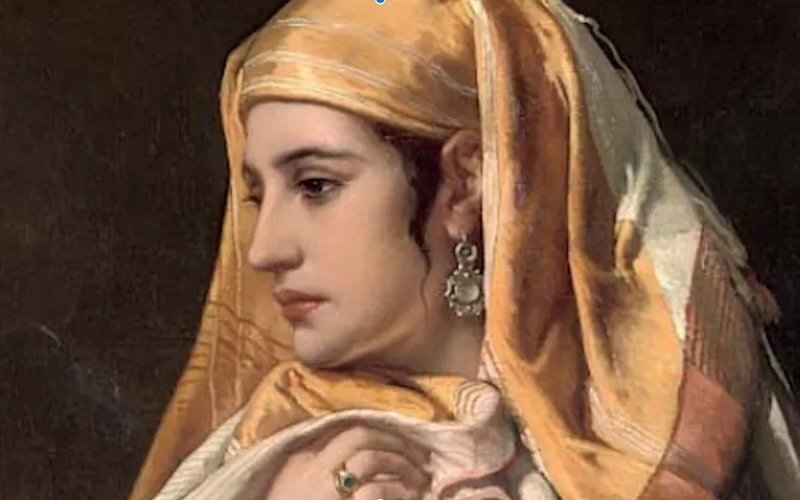
Cover image: Jean-François Portaels, “Femme orientale,” 1877